
Editorial
Amp Modelers: The Technology Finally Caught Up. Then COVID Finished the Job.
For two decades the digital amp was a compromise. Then the Kemper, the Axe-FX, and the Quad Cortex arrived. Then touring stopped for two years and everything changed.
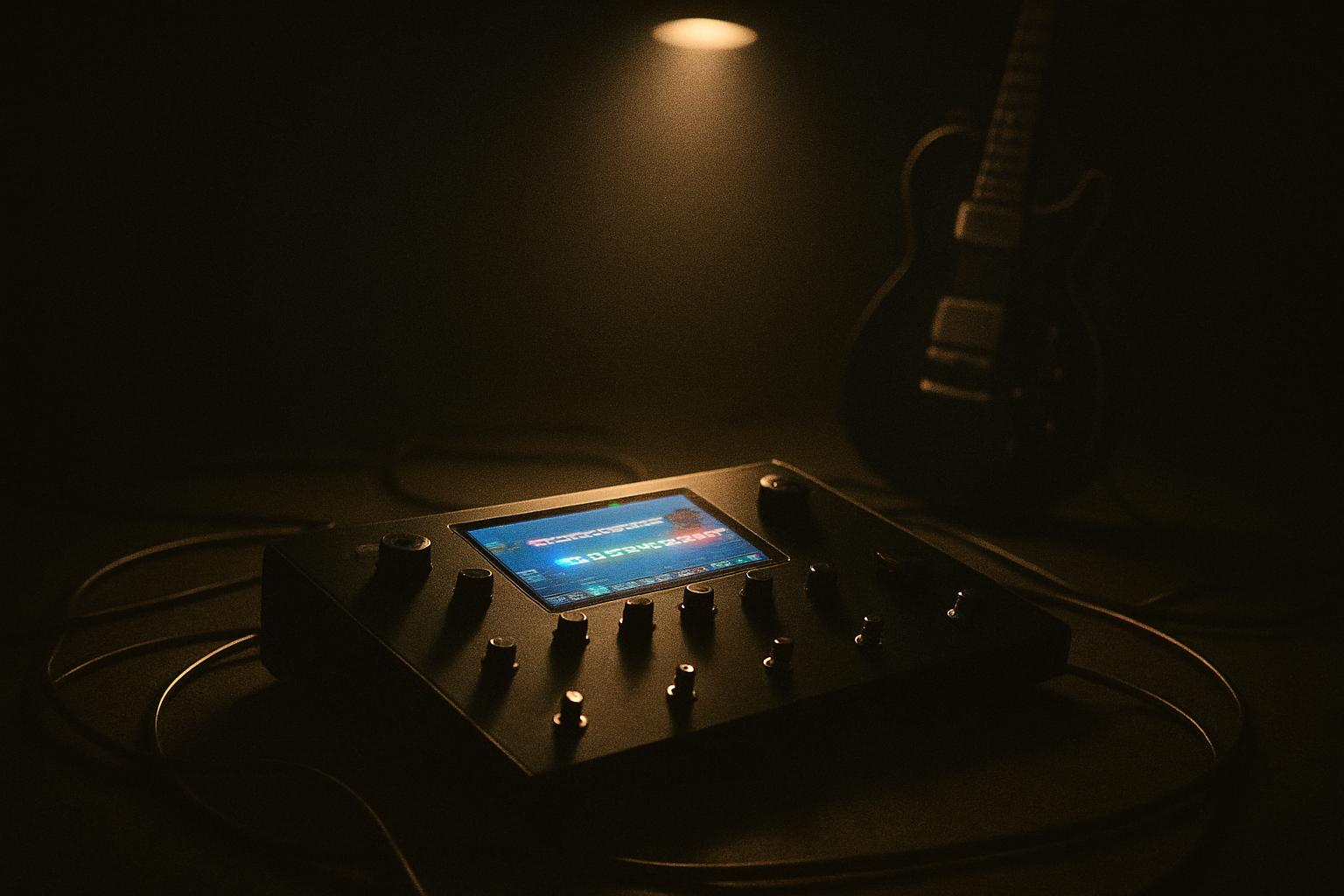
The argument against digital amp modeling has always been the same: it does not feel like the real thing. The sound might be close — and in the early years it was not close — but the way a tube amplifier responds to picking dynamics, the physical interaction between power tubes, output transformer, and speaker cabinet, the way a cranked Marshall breathes when you play hard and relaxes when you ease off — none of that was in a Line 6 POD. The original red bean, which arrived in 1998 and sold in enormous numbers and genuinely changed how guitarists approached home recording, sounded like a guitar amplifier the way a photograph of a steak resembles dinner. Technically correct. Experientially not the same thing at all.
That was a fair criticism for a long time. It is no longer fair, and it stopped being fair sometime around 2011 when the Kemper Profiler arrived and the amp modeling world became a fundamentally different proposition than it had been.
What Changed First: The Technology
The Fractal Audio Axe-FX had been making the argument since 2006 that digital modeling could reach professional quality, and a dedicated community of touring and studio players had validated that argument. But the Axe-FX was expensive, required technical investment, and remained inaccessible to players who were not willing to commit significant time to understanding it. It was a professional tool for people willing to work like professionals to get results from it.
The Kemper Profiler changed the conversation because it changed the approach entirely. Instead of modeling — recreating an amplifier's circuit behavior through mathematical algorithms — the Kemper profiled. You plugged in a real amp, ran a series of test tones through it, and the Kemper created a digital capture that reproduced not just the amp's tonal character but its specific behavior at that specific setting. The result was not a simulation of a Marshall. It was a snapshot of your Marshall, at the settings you used, at the moment of capture. Players who owned great amps could now have those amps inside a floor unit that weighed ten pounds.
The implications for touring were immediate. A guitarist who previously had to ship a head and cabinet — or trust the backline rental lottery — could now profile their own amps, load them into a Kemper, and arrive at any show with their actual sound in a bag. The consistency argument for digital, which had previously rested on the dubious claim that digital sounded as good as the real thing, now rested on the more defensible claim that digital sounded exactly like your real thing, every night, in any venue, at any volume, without tube failures or maintenance schedules.
The Line 6 Helix arrived in 2015 and brought the modeling approach to a broader market at a lower price point, with a user interface that did not require an engineering background. The Neural DSP Quad Cortex followed in 2020 with neural capture technology and a touchscreen interface that represented the most intuitive floorboard modeler yet built. By the time the Quad Cortex reached players, the quality gap between the best digital units and real tube amps had effectively closed for most practical purposes. Blind listening tests among professional guitarists and audio engineers routinely failed to distinguish Quad Cortex captures from the amps they were taken from.
Modelers outsold traditional guitar amps on Reverb in 2025. That number did not come from nowhere. It is the endpoint of a fifteen-year technology curve.
What Changed Second: The Pandemic
In March 2020, the live music industry collapsed. Every tour was canceled. Every venue was shut. The entire economic structure through which professional musicians made a living on the road stopped operating for an extended period that most of them had not anticipated and none of them were prepared for. The first response was financial panic. The second, for many working musicians, was a forced reconfiguration of how they worked.
Players who had been touring and relying on backline sat in home studios and apartment bedrooms and had to find a way to keep making music, recording, and maintaining professional output without the equipment that had lived on the road with them. A tube amp at bedroom volume sounds wrong. A cranked Twin Reverb in a New York apartment is not a viable option. A Kemper through headphones or studio monitors is a working home recording setup at any volume.
The pandemic forced millions of musicians to seriously evaluate amp modeling for the first time, or to commit to it in ways they had previously resisted. Players who had used a modeler as a backup suddenly began using it as a primary. Players who had remained skeptical ran out of reasons to stay skeptical when their tube amp was sitting in a storage unit and their only option was a floor unit. The conversion rate during 2020 and 2021 was not small. It represented a permanent shift in how a generation of working musicians approached amplification.
When touring returned, it returned differently. Players who had recorded entire albums with modelers during lockdown and been pleased with the results were not rushing to ship heads and cabinets again. The economics of touring had also changed — freight costs, fuel costs, equipment insurance — and a floorboard that replaced a head, cabinet, and pedalboard was now more attractive as a logistical solution than it had ever been. Players who returned to the road with modelers found that the IEM systems that had become more prevalent in live sound worked perfectly with the direct signal a modeler outputs, eliminating monitor problems and stage volume issues in a single decision.
The Three Eras of Digital Amp Modeling
Understanding why modelers finally won requires understanding how bad they were for how long, and how specifically the technology improved.
The first era, running from r [... truncated ...]