
News
When Joe Satriani Called a Boutique Builder to Chase Eddie Van Halen's Ghost
Dylana Nova Scott and 3rd Power's DRGN 100 is the best argument against plug-and-play tone solutions in years — and a reminder that the greatest amp sounds in history were never accidents
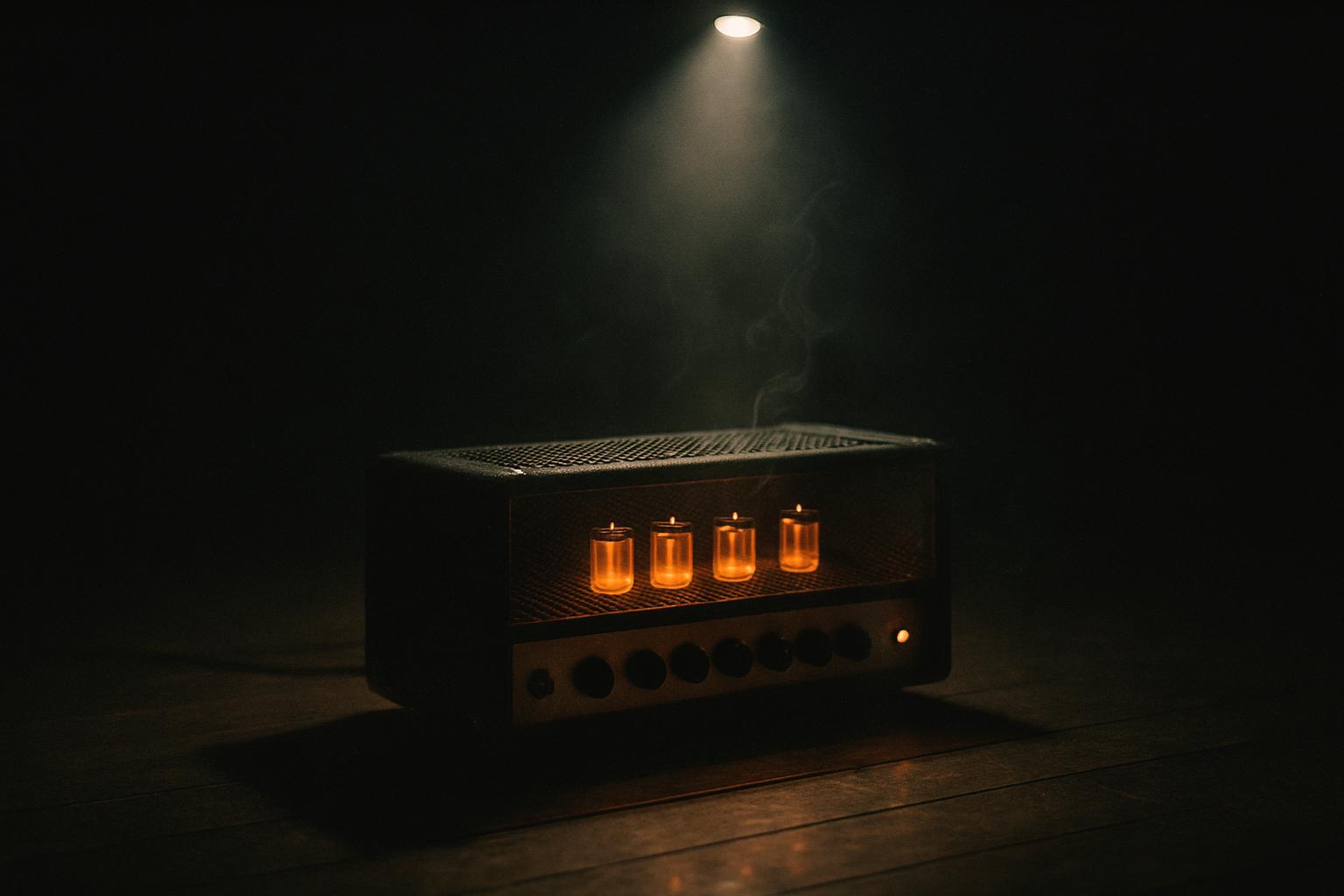
Guitar World ran a feature this week on Dylana Nova Scott, founder of Minnesota-based boutique amp house 3rd Power, and how she built Joe Satriani's touring amp for the Sammy Hagar-fronted Best of All Worlds tour. The hook is simple and extraordinary at once: one of the most technically accomplished guitarists alive, with decades of world-class gear behind him, sat down and admitted that his existing rig simply could not do what Eddie Van Halen's rig had done. So he called a boutique builder most casual guitar fans have never heard of and said: build me something that can.
The result is the 3rd Power DRGN 100 (Reverb) — a 100-watt, hand-wired, point-to-point tube head rooted in the DNA of the 1967–1968 Marshall Plexi Super Lead. It is now Satriani's favorite amp. He is running three of them in a wet/dry/wet rig on one of the most scrutinized guitar tours of the decade. And Scott, who only recently transitioned publicly as she turned fifty, barely got a headline out of any of it. That is a problem worth talking about.
The Impossible Brief
Let's establish what Satriani was actually being asked to do. When Sammy Hagar extended the invitation for his former Chickenfoot bandmate to join the Best of All Worlds tour, the job was not simply “play some Van Halen songs.” The job was to inhabit Eddie Van Halen's specific tone, technique, and physical guitar vocabulary in front of audiences who had spent decades listening to those exact recordings. That is a different kind of pressure entirely.
Satriani was characteristically honest about where he stood. His existing rig, he admitted, was built for his own music — optimized to fatten up the high strings for melodic lead playing, not to produce the raw, explosive mid-forward crunch that defined Van Halen's rhythm work. The tone he needed was not just a matter of dialing up more gain. It was a specific harmonic character locked inside a specific chain: Eddie's modded 1968 Marshall Super Lead, serial number 12301, the amp he had running through the Best of All Worlds tour's target era — Van Halen's 1986 Live Without a Net concert film, the pivot point between the David Lee Roth years and the Sammy Hagar era.
That particular amp is not just a piece of history. It represents the absolute pinnacle of one guitarist's long obsession with modifying, rewiring, and sometimes destroying amplifiers in pursuit of a sound nobody else had. Eddie Van Halen was not a passive consumer of gear. He was an active participant in the physics of his own tone in a way that very few players before or since have matched. Chasing that sound without understanding that reality is how you end up with a rig that sounds like a rough approximation. Satriani understood this. His existing gear could not get him there, and he knew it.
Why He Called a Boutique Builder
Here is where the story gets genuinely interesting. When Satriani went looking for help, he did not call the obvious names. He did not reach for a production-line EVH-branded head or a prebuilt Marshall clone off a dealer's shelf. Instead, he went back to the people who knew Eddie's gear most intimately — the late guitarist's own tech crew. And every one of them pointed him toward the same person: Dylana Nova Scott at 3rd Power.
Scott is not a household name outside of a specific corner of the boutique amp world, which is part of what makes this story so worth examining. Her company has built amps for Joe Walsh, Steve Vai, Neal Schon, Lenny Kravitz, and Brad Whitford. She is a three-time patented inventor with a background that spans Line 6, X2 Digital Wireless, and Sennheiser. She has been doing serious engineering work in the guitar industry for more than four decades. And yet if you walked into any guitar store in America and asked about 3rd Power, you would likely be met with a blank stare.
That gap between reputation and recognition is endemic to the boutique amp world. The players who use these builders know exactly who they are and why they matter. Everyone else is busy looking at the brands with the marketing budgets. Satriani closing that gap — by publicly crediting Scott, by letting the Guitar World feature run, by talking openly about what his existing rig could not do — is a genuinely useful service to the larger gear community. It forces a conversation about what boutique builders actually provide that major amp manufacturers cannot.
What the DRGN 100 Actually Is
The DRGN 100 is not a clone. This cannot be overstated, because the reflex in the gear community whenever someone builds a Marshall-inspired amp is to immediately ask which Marshall it copies and how faithfully. Scott and 3rd Power are explicitly not in that business. The amp draws its foundational voice from the late-1960s British amplifier tradition — the commanding mids, explosive harmonic texture, and fast attack of the original Plexi platform — but it was never conceived as a period recreation. The goal was to pursue what Scott called “authority, feel, and dimensional complexity required at the highest level of performance.”
Under the hood, that translates to a hand-wired, point-to-point build using a quad of Svetlana EL34 output tubes running at approximately 495 volts DC plate voltage — a deliberately high rail voltage that pushes the tubes into a richer, more saturated harmonic territory. The transformers are custom-wound in the USA by Heyboer. The preamp runs four carefully selected tubes: JJ ECC83S and Sovtek 12AX7LPS dual triodes configured for switchable Vintage Plexi and High Gain Cascade modes. The tone stack is a Class A cathode-follower design, which is a choice with significant feel implications — it loads the preamp differently than a standard passive tone stack, providing a more interactive relationship between the EQ controls and the overall gain structure.
The headline feature is 3rd Power's patented HybridMASTER volume management system — a control that simultaneously adjusts volume, limits DC current, and regulates the DC plate voltage of the tube circuitry. This is not a power soak, and it is not a conventional master volume in the signal-path sense. It is a holistic approach to managing the amp's operating conditions across different volume settings, which means the amp's character — the way it responds to pick attack, the way harmonics develop under the hands — remains consistent whether it is running at arena volume or rehearsal volume. That is genuinely difficult engineering, and it is the kind of problem that production-line manufacturers rarely solve as elegantly.
Loading comments...